


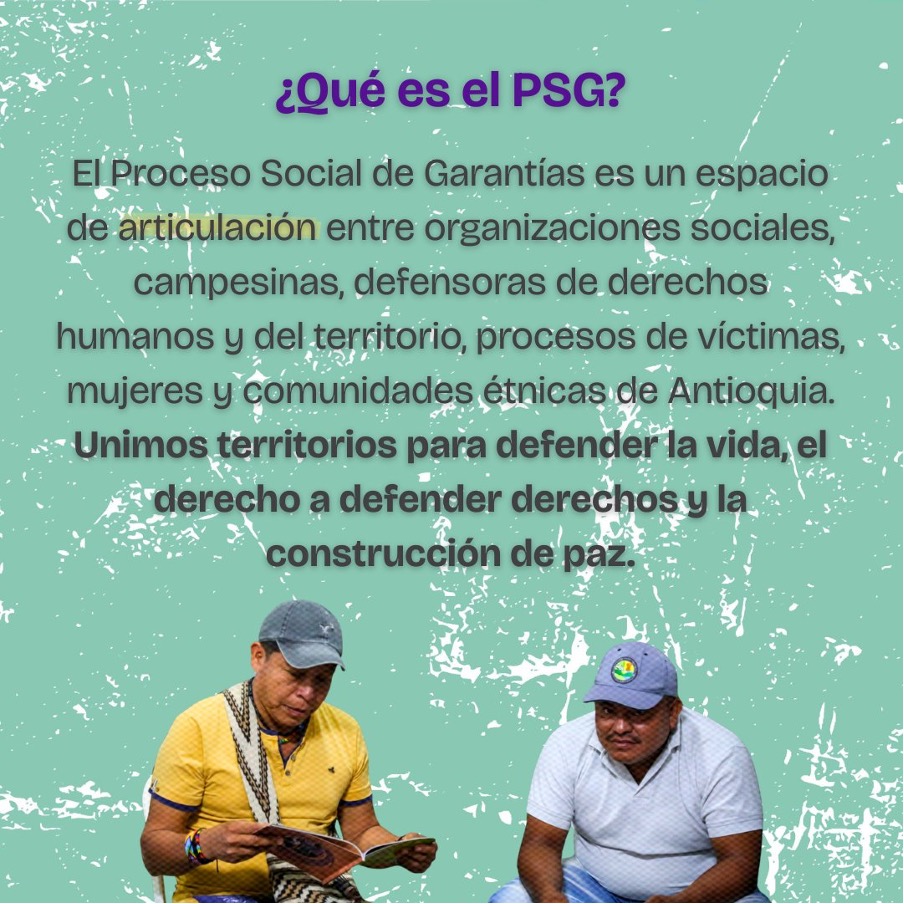
The Social Process of Guarantees (Proceso Social de Garantías – PSG) Annual Assembly 2025 was attended by social leaders from eight subregions of the department of Antioquia, representing 40 social, peasant and indigenous organisations.
During the PSG assembly, a space was set aside to share the main findings derived from the systematisation of self-protection actions implemented by the Bajo Cauca organisations that participated in the Creating Safer Space research project “The Social Process of Guarantees of Antioquia, Colombia, an experience of unarmed civil protection with indigenous and peasant communities of Bajo Cauca“, led by Corporación Jurídica Libertad (CJL).
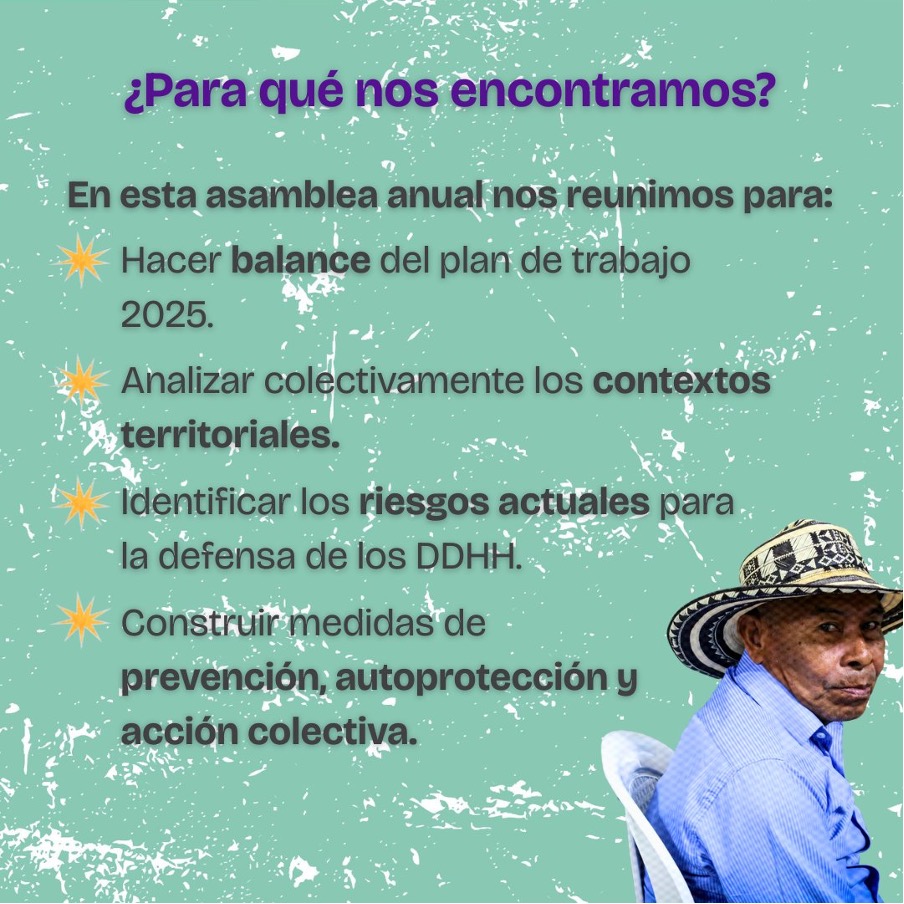
The purpose of this exercise was to highlight the relevance of community self-protection measures and strategies in the face of the risks present in the territories. It also sought to encourage other organisations attending the assembly to reflect on the relevance of creating or strengthening their own collective communityself-protection strategies, using the experience documented and analysed within the framework of the project as a reference.
This space proved to be fundamental, as it enabled the incorporation of two specific strategies into the PSG’s work plan:
- Advocacy directed at departmental authorities:
- The request was made that the departmental authorities participating in the Territorial Guarantees Committee strengthen the community self-protection measures implemented by some PSG organisations. Among the prioritised actions is the continued demand for the adaptation and improvement of humanitarian shelters as mechanisms for collective protection in situations of risk.
- Strengthening training and awareness-raising processes:
- The PSG will continue to provide training opportunities in collective and community protection. In this context, it recognises the importance of managing resources aimed at supporting material measures for raising awareness and marking territory, such as the installation of white flags, fences with humanitarian symbols, and the provision of T-shirts that identify the organisations’ civil commitment to peace and the defence of human rights. Similarly, there is a need to continue raising the profile of humanitarian shelters as a strategy for protection and community recognition.