Agnieszka Ziatek-Tith supports the Creating Safer Space network with monitoring costs, advising on financial matters, and processing payments to partners and commissioned projects around the world. She will gladly answer all your questions about these subjects.
Research Cafés on Creative Research Methods
The Creating Safer Space network has organised two Research Cafés to inform researchers about creative research methods, and the benefits of such methods for research on Unarmed Civilian Protection.
Using Textiles as a Research Method
On Thursday 17 March 2022, Prof. Beatriz Arias provided an an introduction to using textiles (embroidering, sewing, and other needlework) as a participatory and creative research method.
Using Drawing as a Research Method
On Thursday 17 February 2022, Prof. Berit Bliesemann de Guevara provided an introduction to ‘Drawing Out’ as a participatory and creative research method.
New work package: Nonviolent Artivism Against Police Brutality in Kenya
The Creating Safer Space network is pleased to announce a new work package on the following topic:
Nonviolent Artivism Against Police Brutality in Kenya
The work package is led by Martha Okumu (Peace Tree Network) in collaboration with Elias Opongo (Hekima University College).
A mural of police brutality in Kibra’s Kamukunji grounds by Detail Seve on June 4, 2020.
Image: MERCY MUMO
Nonviolent Artivism Against Police Brutality in Kenya
A mural of police brutality in Kibra’s Kamukunji grounds by Detail Seve on June 4, 2020. Image: MERCY MUMO
This research explored youth and civil society nonviolent artivism against police brutality in two Kenyan locations: Nairobi and Kisumu. “Nonviolent artivism” here includes the use of wall paintings and pictures (murals, graffiti, and visual art), spoken word, poetry and music, when they are used as unarmed civilian protection strategies.
Over the years, there have been advocacy initiatives and public demonstrations against police brutality. The demonstrations have often been met with brutal force from the police, sometimes leading to deaths of civilians. For example, in 2020 there were 109 demonstrations and protests on diverse social issues of concern. The demonstrations were in compliance with the law of the constitution which gives citizens the right to self-expression and peaceful public demonstrations. Despite this, there were 9 deaths that were directly attributed to excess use of force by the police and 113 unlawful arrests.
Many civil rights groups have realized that direct physical demonstrations against the police often have a negative impact and bear a high risk of police brutality. As an alternative, artivism was adapted as a strategy for unarmed civilian protection against brutality. This research has taken a special interest in studying artivistic strategies applied by both the youth and civil society organizations and exploring the extent to which these strategies have succeeded in reducing incidences of police brutality.
RESEARCH TEAM
Martha Okumu, Peace Tree Network (principal investigator)
Elias Opongo, Hekima University College
PROJECT OUTPUTS
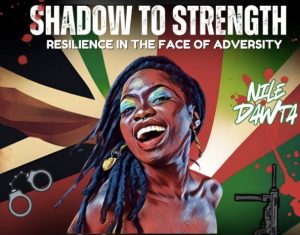
Shadow to Strength: Exhibition, performances, and discussions
In December 2024, the project team organised the exhibition and event “Shadow to Strength: Resilience in the Face of Adversity” in Nairobi’s Kenya National Theatre.
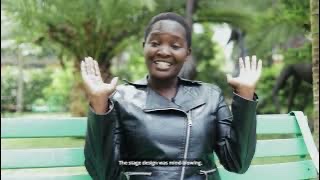
This documentary captures highlights of the event as well as reflections of its organisers and participants.
There is also a series of short videos capturing some of the artistic highlights from the exhibition and performances.
The event also featured a panel discussion on artivism against police brutality in Kenya, which you can listen to in this video.
Song/Poem: When a young blood bleeds
This song/poem was written by Spontaneous the Poet, and recorded as part of this project. Spontaneous the Poet says, “This piece was written in remembrance of people who’ve lost their relatives from extra judicial killings. It is actually based on a true story and I’m so grateful that they took part in the shooting of the video.”
Images of artwork
This project has produced images of artwork related to police brutality in Kenya. Some of these have been shown as part of the Creating Safer Space exhibition, which has toured around the world and is also available to view online as a virtual 360° Exhibition.
These murals were made by a local community-based organisation that works on defending human rights in Kisumu, in order to create awareness on having a peaceful election before, during and after general elections in 2022. For more images, see the Creating Safer Space virtual 360° Exhibition.
RESEARCH SUMMARY
In carrying out this research, we undertook the following activities:
Key informant interviews: A total of 56 respondents were interviewed. These respondents were youth and women community leaders, artists, victims and survivors of police brutality, CSO members, Police Officers and Judiciary Staff.
Focus group discussions (FGDs): We conduced 3 FGDs with two being held in Nairobi and one in Kisumu. A total of 36 respondents took part in these discussions.
Validation workshop: Our final research activity was the validation workshop, which was held in Nairobi. We presented the research findings for validation to 14 research respondents from Nairobi and Kisumu.
From our research analysis, we found that respondents had experienced some form of police brutality at a personal level or through family members. The major forms of police brutality experienced included:
Excessive use of force by the police while undertaking their duties;
Extra judicial killings by the police especially in low-income areas;
Arbitrary arrest;
Torture;
Excessive use of teargas;
Beating of civilians;
Shooting of civilians;
Some respondents had experienced all of the above.
Role of artists in addressing police brutality in Kenya:
By employing their creative abilities to spread awareness, spark debate, and promote change, artists significantly contributed to the effort to combat police brutality in Kenya. Our research sought to understand the techniques employed by Kenyan artists to help raise awareness of cases of police brutality, and to promote change by addressing incidences of police misconduct.
The respondents identified four major roles that artists play to help address police brutality in Kenya, namely:
They act as a mirror to the society;
They create awareness on issues of police brutality;
They show solidarity to the victims of police brutality;
They shape knowledge on how to deal with cases of police brutality.
Successful artivism strategies used to address police brutality:
Poems/spoken word
Music
Plays
Graffiti
Cartoons
It is important to note that the success of the above strategies varied depending on the location of the research.
Research Café: Using Drawing as a Research Method
The aim of the Creating Safer Space Café is to enable people in different parts of the world to exchange knowledge and to help build a community of Unarmed Civilian Protection (UCP) researchers and practitioners.
This month, Prof. Berit Bliesemann de Guevara (Aberystwyth University, UK) and Prof. Rachel Julian (Leeds Beckett University, UK) will provide an introduction to ‘Drawing Out’ as a participatory and creative research method, and will explore the benefits of using this method for research on Unarmed Civilian Protection.
12.30 – 2.00 pm UTC on Thursday 17 February
The session will be held in English and Spanish with simultaneous translation.
The Creating Safer Space network invites applications for research grants. We aim to fund 15-20 research projects to understand and support unarmed civilian protection and self-protection amidst violent conflict. Grants range from £20,000 – £100,000 GBP.
Potential applicants are warmly invited to one of our information sessions in English or Spanish.
English:
10.00 – 11.00 am UTC on Tuesday 1 February
8.00 – 9.00 am UTC on Wednesday 2 March
Spanish:
3.00 – 4.00 pm UTC on Tuesday 1 February (this is 10.00 – 11.00 am in Colombia)
Please contact creating-safer-space@aber.ac.uk for the Zoom joining details. More information about our funding opportunities are available on our website.
Community Empowerment for Progress Organization
South Sudan
Community Empowerment for Progress Organization (CEPO) is a non-governmental organization in South Sudan with focus on governance, democratic transformation, protection of human rights, rule of law, peace building and livelihood. CEPO operations are nationwide in South Sudan.
Key individuals involved in the Creating Safer Space network are Mr Edmund Yakani and Miss Elizabeth Daniel.
Strengthening Local Capacities for Unarmed Civilian Protection in Uasin Gishu, Kenya
Research activities with community members in Uasin Gishu
This project sought to generate new, evidence-based knowledge and understanding regarding civilians’ agency in local conflict transformation processes in Kenya’s Uasin Gishu County. The research was conducted in three urban hotspot areas of Uasin Gishu, which have been at the centre of heated political contests in recent electioneering periods (2013 and 2017 general elections) and were adversely affected by the 2007-2008 post-election violence.
Using participatory methods such as the People-First Impact Method (PFIM) and Community Scorecards, the project explored existing and emergent local civilian protection systems and the related civilian knowledge and/or capacity gaps that need to be addressed to bolster them. Its findings provide a local and contextual understanding of the dynamics of unarmed civilian protection (UCP) in Uasin Gishu, the role played by civilians/civilian groups in local peace processes and protection systems, and how UCP in Uasin Gishu feeds into county and national security organs.
The project aimed to achieve the following outcomes:
Enhanced knowledge on existing and emergent local civilian protection systems in Burnt Forest, Langas and Turbo;
Improved knowledge on civilian capacity gaps regarding unarmed civilian protection in Burnt Forest, Langas and Turbo;
Improved knowledge on the intersectionality between international, national and local (self-protection) civilian protection mechanisms.
Research activities in Uasin Gishu
RESEARCH TEAM
Clinton Gwako, Rural Women Peace Link (principal investigator)
Research Café: UCP, civil resistance, and human rights defence
The aim of the Creating Safer Space Café is to enable people in different parts of the world to exchange knowledge and to help build a community of Unarmed Civilian Protection (UCP) researchers and practitioners.
This month, Dr Christine Schweitzer (BSV – Federation for Social Defense, and Institute for Peace Work and Nonviolent Conflict Transformation, Germany) will give us input for a discussion on the topic:
What is Unarmed Civilian Protection (UCP)? How does it relate to or differ from civil resistance and human rights defence?
12.30 – 1.30 pm UTC on Thursday 20 January.
The session will be held in English and Spanish with simultaneous translation.
All welcome. Please contact creating-safer-space@aber.ac.uk for the Zoom joining details.
We use cookies on this site to enhance your user experience
By clicking the Accept button, you agree to us doing so.