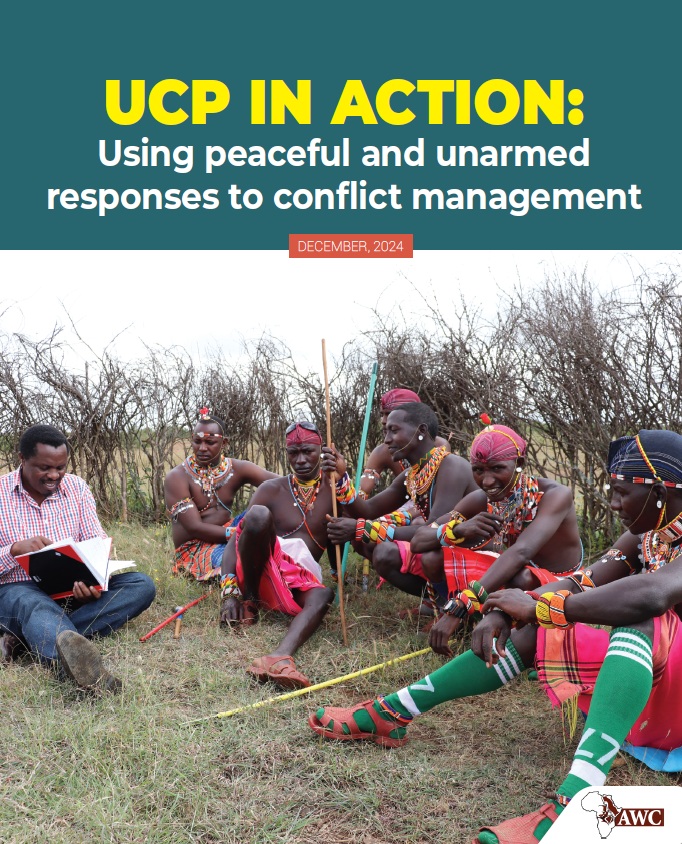
The Creating Safer Space project “Using multimedia approaches to increase visibility of and preference for Unarmed Civilian Protection approaches” has published a report, UCP in Action: Using peaceful and unarmed responses to conflict management. It contains six short articles that show how people in different parts of Kenya are using unarmed civilian protection to protect themselves and others in different contexts of violence.
Author: webmaster
Creating Safer Space at UN Protection of Civilians week 2025
On 19 May 2025, Creating Safer Space co-investigator Nerve Macaspac participated in an event on “Civilian-Centred Approaches and POC in a Changing World: Moving from Policy to Practice”. This side event of the United Nations’ Protection of Civilians (POC) week in New York was co-organised by Nonviolent Peaceforce, CIVIC, PAX, Creating Safer Space, HPG/ODI, UNHCR, the Permanent Observer Mission of the African Union to the UN and the Permanent Missions of the Netherlands, the Democratic Republic of Congo (DRC), Panama, and Austria.
As the final report of the event summarises (p. 1): “The presentations and reflections shared during the event underscored the growing urgency (and potential) of civilian-centred approaches to protection in today’s evolving conflict contexts. In light of shrinking humanitarian space, overstretched multilateral operations and the withdrawal of key international actors from high-risk areas, panellists and participants highlighted how civilians themselves are not only responding to immediate threats but also shaping the longer-term architecture of protection. The discussion explored how UN peace operations, regional organisations and Member States can more meaningfully partner with civil society actors who are actively building early warning systems, engaging with armed actors and influencing protection policies. Drawing on diverse experiences from Yemen, DRC and Iraq, the conversation moved beyond policy recognition of the need to protect towards considering what concrete shifts – financial, political and structural – are needed to embed community-led protection in operational practice.”
Dr Macaspac joined speakers from the Permanent Mission of the Netherlands, Nonviolent Peaceforce, PAX, and CIVIC. Synthesising the discussion, and drawing on findings from the CSS projects, he noted that while ‘protection of civilians’ is a frequent topic in global forums, those most directly engaged in self-protection are often excluded from the conversation. He highlighted the consistent thread across diverse contexts: civilians are already leading protection work within their communities, using creative and effective strategies grounded in trust, legitimacy and local knowledge. He therefore urged a reconceptualisation of what counts as ‘protection work’, recognising its multifaceted nature and the value of flexibility, community-specific tools, and ongoing engagement with CSOs. His concluding point was clear: community-led POC is not a complement to existing frameworks; it should be the standard, precisely because it works, and because it is already happening.
For a full summary of the session, see this final report written by Nonviolent Peaceforce.
New podcast series on civilian protection in Papua
The Creating Safer Space project “Civilian (Self-) Protection from Violent Conflict in Papua: Exploring Local Infrastructures and Initiatives” has published a series of 12 podcasts focusing on unarmed civilian protection in Papua and related topics. Episodes include:
- The story of a researcher researching conflict in Papua, Myanmar, and Thailand
- Diversity in Papua
- Poor Education and Immigrant-Dominated Governance: Is there still hope in Papua?
- A pastor shows a strategy to protect civilians in Papua
- The Problem of Special Autonomy in Papua and Aceh and the Contribution of Civil Society
- Papua in the eyes of a Humanitarian Worker: From Regional Security, Education to Tolerance
- Protecting Civilians without Weapons in South Sudan: Can it be applied to Papua?
- The story of a Papuan IDP who is reluctant to return home due to armed conflict
- Rarely discussed situations in Papua
- Papuan Student Discusses the Richness of Papua’s Nature and Culture
- The Ups and Downs of Being a Humanitarian Worker in Papua
- Knowing Customs, Culture, and the Potential for Investment in Papua
NB: The podcasts can be translated from Indonesian to other languages by enabling subtitles and auto-translation in the YouTube settings.
Podcasts on civilian protection in Papua
The Creating Safer Space project “Civilian (Self-) Protection from Violent Conflict in Papua: Exploring Local Infrastructures and Initiatives” has published a series of 12 podcasts, focusing on unarmed civilian protection in Papua and related topics.
The story of a researcher researching conflict in Papua, Myanmar, and Thailand
Speaker: Arfiansyah
Diversity in Papua
Speaker: Askin Alimda
Papua: Poor Education and Immigrant-Dominated Governance: Is there still hope in Papua?
Speaker: Arfiansyah
A pastor shows a strategy to protect civilians in Papua
Speaker: Pastor Diben Elaby
The Problem of Special Autonomy in Papua and Aceh and the Contribution of Civil Society
Speaker: Dr. Laus D.C Rumayon
Papua in the eyes of a Humanitarian Worker: From Regional Security, Education to Tolerance
Speaker: Lutfi Firdaus
Protecting Civilians without Weapons in South Sudan: Can it be applied to Papua?
Speaker: Hermanto
The story of a Papuan IDP who is reluctant to return home due to armed conflict
Speaker: Lamberti Faan (an IDP woman)
Rarely discussed situations in Papua
Speaker: Marcelus Fernandes Titit
Papuan Student Discusses the Richness of Papua’s Nature and Culture
Speaker: Nelson Sani
The Ups and Downs of Being a Humanitarian Worker in Papua
Speaker: Intanus Gwijangge
Knowing Customs, Culture, and the Potential for Investment in Papua
Speaker: Dr. M. Adli Abdullah
Leader of Welsh Government Visits Creating Safer Space Exhibition

The Creating Safer Space Exhibition was on show at the Temple of Peace and Health in Cardiff, UK, from 24-28 March. It was co-organised with Academi Heddwch Cymru and the Welsh Centre for International Affairs.
We were delighted to receive a visit from the First Minister of Wales, Eluned Morgan, who is the leader of the Welsh Government. We provided her with a tour of the exhibition, and a copy of our new Creating Safer Space brochure.
In conjunction with the Exhibition, we also co-hosted a Lunch & Learn policy event on Civilians and Nonviolence in Crisis Preparedness and Management. Speakers included Prof. Berit Bliesemann de Guevara (Creating Safer Space Principal Investigator), Prof. em. Colin McInnes (Academi Heddwch) and David Warren (Head of International Relations at Welsh Government). Discussion centred on how community-led civilian protection initiatives can be supported by Welsh politics and civil society, and how lessons from other contexts can enrich Welsh initiatives and policies, such as Academi Heddwch’s ‘Wales as a Nation of Peace’ report.
A new Creating Safer Space policy brief was also published for the occasion, Nonviolent Community Strategies Make Civilians Safer (available in English and Welsh).
Creating Safer Space Exhibition in Cardiff

The Creating Safer Space Exhibition was on show at the Temple of Peace and Health in Cardiff, UK, from 24-28 March. It was co-organised with Academi Heddwch Cymru and the Welsh Centre for International Affairs.
We were delighted to receive a visit from the First Minister of Wales, Eluned Morgan, who is the leader of the Welsh Government. We provided her with a tour of the exhibition, and a copy of our new Creating Safer Space brochure.
In conjunction with the Exhibition, we also co-hosted a Lunch & Learn policy event on Civilians and Nonviolence in Crisis Preparedness and Management. Speakers included Prof. Berit Bliesemann de Guevara (Creating Safer Space Principal Investigator), Prof. em. Colin McInnes (Academi Heddwch) and David Warren (Head of International Relations at Welsh Government). Discussion centred on how community-led civilian protection initiatives can be supported by Welsh politics and civil society, and how lessons from other contexts can enrich Welsh initiatives and policies, such as Academi Heddwch’s ‘Wales as a Nation of Peace’ report.
A new Creating Safer Space policy brief was also published for the occasion, Nonviolent Community Strategies Make Civilians Safer (available in English and Welsh).
Leader of Welsh Government Visits Creating Safer Space Exhibition

The Creating Safer Space Exhibition was on show at the Temple of Peace and Health in Cardiff, UK, from 24-28 March. It was co-organised with Academi Heddwch Cymru and the Welsh Centre for International Affairs.
We were delighted to receive a visit from the First Minister of Wales, Eluned Morgan, who is the leader of the Welsh Government. We provided her with a tour of the exhibition, and a copy of our new Creating Safer Space brochure.
In conjunction with the Exhibition, we also co-hosted a Lunch & Learn policy event on Civilians and Nonviolence in Crisis Preparedness and Management. Speakers included Prof. Berit Bliesemann de Guevara (Creating Safer Space Principal Investigator), Prof. em. Colin McInnes (Academi Heddwch) and David Warren (Head of International Relations at Welsh Government). Discussion centred on how community-led civilian protection initiatives can be supported by Welsh politics and civil society, and how lessons from other contexts can enrich Welsh initiatives and policies, such as Academi Heddwch’s ‘Wales as a Nation of Peace’ report.
A new Creating Safer Space policy brief was also published for the occasion, Nonviolent Community Strategies Make Civilians Safer (available in English and Welsh).
New Policy Brief on Spontaneous UCP in Colombia, Myanmar and South Sudan
The Creating Safer Space project ‘Understanding Community-level Spontaneous Unarmed Civilian Protection (UCP): A Comparative Study of Initiatives in South Sudan, Myanmar and Colombia’ has published a policy brief, Unarmed Civilian Protection: Comparative Insights from Colombia, Myanmar, and South Sudan. This comparative policy brief explores how local communities engage in UCP and what lessons learned from existing UCP activities may, and may not, be transferable across conflict contexts. It focuses on the activities of local community actors in Nariño, Colombia; Central Myanmar, Kachin and Chin State in Myanmar; and Juba (Central Equatoria) and Rumbek (Lakes State) in South Sudan.
New Article in Journal of Global Security Studies
The Creating Safer Space project ‘Exploring Community Perceptions and Coping Strategies on Violence in Rakhine State, Myanmar’ has published an article, ‘Agency during Armed Conflict: Everyday Life under Competing Authorities in Myanmar’s Rakhine State’, in the Journal of Global Security Studies. It is authored by Florian Weigand, Riyad Anwar, Tony Neil and Abellia Anggi Wardani.
The paper draws upon fieldwork in Myanmar’s Rakhine State to analyse the relationship between ordinary people and competing authorities during armed conflict. In particular, the paper investigates the sources of agency that enable civilians to engage with armed actors, for instance, to ensure their own protection. It is openly accessible here.
New Film on the Potential of Local Research Seedbeds in Colombia
The Creating Safer Space project ‘Community strategies for Unarmed Civilian Protection in South-West Colombia: local experiences and lessons learned’ has created a short film, Safe in Our Home. The documentary explores the potential of local semilleros (seedbeds) in facilitating community-based research on strategies for the protection of unarmed civilians and wider issues of (in)security. It was created by two students at Universidad Autónoma de Occidente (UAO) in Colombia, Santiago Hernandez and Manuela Romero, who presented it as their final year project under the supervision of Dr Natalia Campo (Co-Investigator on the project).