Invitation to Film Festival

First Festival CineAndo with my people: participatory video and community cinema

The Creating Safer Space project Community strategies for Unarmed Civilian Protection in South-West Colombia: local experiences and lessons learned is organising a Film Festival focused on participatory video and community cinema. The deadline for applying to show a film at the festival is 8 October 2023.

The “I Festival CineAndo con mi gente: video participativo y cine comunitario” (“First Festival CineAndo with my people: participatory video and community cinema”), which will take place on 15 and 16 November in the city of Cali, Colombia, is an event that brings together amateur filmmakers, students, artists and members of the community to share, explore and celebrate audiovisual creativity that emerges from a collective and collaborative perspectives. The Festival’s main objective is to provide an inclusive space where individual and collective voices come together to share their stories in ways that reflect the reality, diversity and aspirations of their communities.

Through the screening of videos, short films and other audiovisual works, the festival offers a platform for the presentation of productions resulting from the active participation andcollaboration of different actors. These audiovisual creations can address a wide range of local and global issues, including analysis of socio-cultural situations, reflections on society and personal experiences.

The festival is not limited to the screening of films. It also encourages interaction and dialogue through conversations, talks and interactive workshops. These spaces seek to allow participants to explore a series of topics such as differences and similarities between community cinema and participatory video, learnings and lessons, and challenges of collaborative audiovisual production techniques.

In addition to celebrating creativity and participation, the festival also has a commemorative
component as it makes memory of social leaders and communities who have been victims of the conflict in the country. In so doing, the Festival also provides opportunities for reflection on issues such as human rights, social justice and historical memory. In this sense, the festival can include screenings that pay homage to territorial leaders and debates that promote reflection on social change through cinema and audiovisuals.

More information about how to make an application to show a video at the Festival is available here:

First Festival CineAndo with my people: participatory video and community cinema

Application Form


Newsletter from “The Social Process of Guarantees of Antioquia, Colombia” project

The research team of the Creating Safer Space project The Social Process of Guarantees of Antioquia, Colombia has produced a newsletter, which details their fieldwork with indigenous and peasant communities in Bajo Cauca.

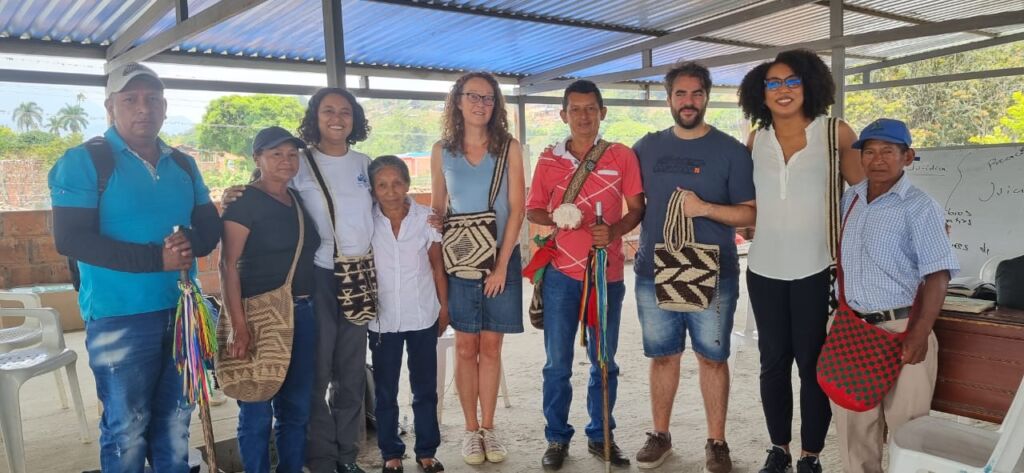
Group of women leaders of the Almendros 2 Indigenous Community, El Bagre 2023

The research team carried out ‘word circles’ with the communities, in order to “deepen the information on the protection and self-protection strategies planned and executed by the ethnic communities and peasant organizations, and the results they have obtained, recognizing the individual and collective practices, motivations and lessons learned”. The research team also accompanied the installation of white flags as a self-protection mechanism.

The newsletter details the findings of the fieldwork, and is available here:
Spanish (original)
English (google translated, so please be aware it may contain inaccuracies)


UCP Research Forum on Asia

The Creating Safer Space team at Chulalongkorn University, Thailand, invites you to the second UCP Research Forum on Asia.

This month, Arfiansyah (International Centre for Aceh and Indian Ocean Studies) and Delsy Ronnie (Nonviolent Peaceforce) will share experiences and insights from their research project, “Exploring Local Infrastructures and Initiatives for Civilian (Self) Protection in Papua amidst Violent Conflict”.

7.30 – 9.00 pm Bangkok time (12.30 – 2.00 pm UTC) on Wednesday 23 August
Please use a timezone converter to check your local time.

The session will be held in English.

Please register for this online Zoom event here:
https://us02web.zoom.us/meeting/register/tZwofuqrpzgiGdfslGBqoXnqTWFTaN-0EFQh


Research Café: The Centrality of Relationships to Nonviolence and UCP

The aim of the network-wide Creating Safer Space Research Café is to enable people in different parts of the world to exchange knowledge and to help build a community of Unarmed Civilian Protection (UCP) researchers and practitioners.

At the next Research Café, Louise Ridden and Felicity Gray will present their research on the Unarmed Civilian Protection in theory and in practice, and the similarities and differences they found in the work.

2.00 – 3.30 pm UTC on Monday 21 August

Please use a timezone converter to check your local time.

The session will be held in English and Spanish with simultaneous translation.

Please register for this online Zoom event here:

https://us06web.zoom.us/meeting/register/tZYkduihqzgsHNLpCgxv5JPo3dMLDbUDK6vk


Fieldwork update from “The Social Process of Guarantees of Antioquia, Colombia” project

The research team of the Creating Safer Space project The Social Process of Guarantees of Antioquia, Colombia spent time in El Bagre with the Indigenous communities of the Senú people and Almendros 2, accompanying a tour of their territory and the installation of white flags as a self-protection mechanism.

This work supports the Indigenous communities’ organizational processes and humanitarian experiences by supporting proposals for building peace within the territory.

You can follow this work on Instagram, Twitter, and Facebook.


Scholars at Risk: Understanding vulnerability and violence faced by Myanmar refugee scholars in northern Thailand

Since the 2021 military coup in Myanmar, the regime’s brutality and political turmoil have escalated, leading to increased suffering and intensified oppression. Thousands of individuals have been killed, detained, or forced to flee their homes in order to escape the junta’s brutality. Many of these individuals have sought refuge in neighbouring Thailand, undertaking perilous journeys both with and without proper documentation. However, those without proper documents face significant limitations and risks, including the threat of being searched, arrested, and deported. To address these challenges and shed light on the experiences of refugees in Northern Thailand, the Regional Center for Social Science and Sustainable Development (RCSD) and Nonviolent Peaceforce Myanmar collaborated with local scholars to explore protection mechanisms and resilience in these exile communities.

Three-finger Flower strike: A symbol of non-violent resistance against the dictatorship

PROJECT TEAM

  • Dr Chayan Vaddhanaputi, Regional Center for Social Sciences and Sustainable Development (RCSD), Chiangmai University, Thailand (co-principal investigator)
  • Nonviolent Peaceforce Myanmar (co-principal investigator)
  • Kyaw Kyaw, Nonviolent Peaceforce Myanmar (project researcher)
Prof. Chayan Vaddhanaputi giving a lecture

RESEARCH OUTPUTS

Report: Understanding Practices of Protection and Resilience

The project has produced a report, Understanding Practices of Protection and Resilience: Co-producing knowledge among Myanmar scholars-in-exile, edited by Aung Kyaw Thein and Elliot Lodge.


Using multimedia approaches to increase visibility of and preference for Unarmed Civilian Protection approaches

While Unarmed Civilian Protection (UCP) approaches have proven to be effective in managing conflicts and protecting civilians trapped in conflicts, their application remains low in Kenya. This can be partly attributed to the low awareness and understanding of what UCP entails. Even in circumstances where UCP has been applied, those engaging with these methods are often not aware that they are using UCP approaches, and the unconscious application of the methods may affect the effectiveness of their interventions. The aim of this project was therefore to address low awareness and low uptake of UCP in managing conflicts in Uasin Gishu and Nairobi counties of Kenya. Drawing on research findings and good practices around UCP in the management of conflict by state and non-state actors, the project increased the understanding, visibility, preference for, and advocacy of UCP. The project responded to perennial conflicts in two counties. In Uasin Gishu County in the North Rift Valley the main causes of conflict are political tensions, cattle rustling, and contestation over natural resources such as water and pasture. In Nairobi, the main causes of conflict are struggles over scarce resources and job opportunities among young people and ethnic groups living in the Kibera, Mathare, and Kariobangi informal settlements as well as widespread discrimination based on ethnic origin and nepotism.

AWCFS holding dialogue with women in Laikipia County on Peace and Security issues and their role in peace building. Photograph by AWCFS.

PROJECT ACTIVITIES

  1. The project produced radio programmes to create awareness of, advocate for, and educate communities on the approaches and benefits of UCP. These were aimed at communities, state actors, development partners, and civil society organisations (CSOs). The radio shows were aired on Kitwek FM Station that broadcasts to Uasin Gishu and other counties, and Ghetto FM radio that broadcasts in Nairobi, especially targeting populations in the informal settlements and low-income areas of the city.
  2. The project conducted two training workshops, each two days long, to build the capacity of selected media practitioners working in the two counties, Uasin Gishu and Nairobi. The workshops enabled the media practitioners to learn about UCP and about how to use the acquired knowledge to promote UCP as an approach to conflict management. The selected journalists had all reported on conflict before. These journalists were then invited to disseminate the findings of the two Creating Safer Space projects in Kenya, Strengthening Local Capacities for Unarmed Civilian Protection in Uasin Gishu led by Rural Women Peace Link (RWPL) and Nonviolent Artivism Against Police Brutality led by the Peace Tree Network (PTN).
  3. The project documented and showcased in-depth stories of change of how UCP approaches have been used to successfully manage conflicts in Uasin Gishu and Nairobi counties.

PROJECT TEAM

Arthur Okwemba, African Woman and Child Feature Service (project lead)
Ruth Omukhango, African Woman and Child Feature Service

PROJECT OUTPUTS

Publication

The project has published a report, UCP in Action: Using peaceful and unarmed responses to conflict management. This contains six short articles that show how people in different parts of Kenya are using unarmed civilian protection to protect themselves and others in different contexts of violence.

Newspaper Articles

A journalist trained by AWCFS, as part of this project, has published two articles in the Star, a daily newspaper in Kenya:

GALLERY

Training of Gender Desk Police Officers at Laico Regency Hotel in Nairobi.
Damaris Lemasulani, Chief of Lodung Okwe, Samburu County, with women discussing their role in enhancing peace in their communities. Photograph by AWCFS.
Morans of Laikipia West, Laikipia County discussing their role in Conflicts and peace building. Photograph by AWCFS.
Arthur shares his point during a sensitisation meeting with Editors in Nairobi.

Africa Regional Research Café on Sudan

By Veronica Kerich, Creating Safer Space project manager, Strathmore University, Kenya

Amidst the escalation of violence in Sudan and the increased risks faced by civilians, African regional stakeholders recently held a meeting to look deliberate on the importance of UCP in the region and how it can be used by various stakeholders and also communities to strengthen civilian capacities against violence and conflicts.

Held on 31 May 2023, the meeting was attended by over 19 representees from the African Region working within the Creating Safer Space NetworkIt considered civilian protection in the region and the existing gaps that needs attention, particularly in the case of Sudan. It also show-cased the work of Nonviolent Peaceforce in the region, and how NP have been working with communities in Sudan since 2021 to implement unarmed civilian protection strategies and continue to work with civilian protection actors across the state. 

Many issues were discussed in this workshop session, including:

  • The active violence against civilians
  • Disruption to the access of essential goods
  • Displacement of civilians and restricted movement
  • Sexual violence and gender-based violence
  • Inter-communal violence
  • Child protection

As a keynote speaker, Dr Felicity Gray presented the report Snapshot: Civilian Protection Needs and Responses in Sudan. She highlighted how the recent escalation of fighting in Sudan has introduced new and rapidly exacerbated existing civilian protection concerns. 

According to the report, civilians are being exposed not only to the impacts of active fighting including gunfire, shelling, and unexploded ordnance (UXO). There is also an increased risk of sexual and gender-based violence (SGBV), displacement, child recruitment, and inter-communal mistrust and violence. The report also provided the background information to contextualise the current escalation of violence and rise in civilian protection needs and the risks facing civilians in Sudan. 

“Responses must include dedicated resourcing for protection activities and programme. And they must go beyond monitoring to ensure action, including direct protection work by community and unarmed civilian actors; investment in community-based protection mechanisms; and recognition that to be sustainable, these protection responses must encompass all parts of the conflict cycle”, explained Dr Gray.

Prof Berit Bliesemann de Guevara, Principal Investigator of the Creating Safer Space project, also attended the meeting and talked of the importance of Networks such as Creating Safer Space that bring together conflict-affected communities, protection practitioners, academics, policymakers, journalists, and artists to jointly work on the vision of enhancing unarmed civilian protection practices, which create safer space for communities amidst violent conflict and help prevent displacement.

Issued that emerged during the meeting’s discussion were:

  1. How to target UN and other peacekeepers with findings; how to adapt findings for their take-up by regional actors such as: AU, IGAD, ECOWAS; and how to adapt UCP at the community level and turn findings into actionable recommendations for armed peacekeepers.
  2. That the African Region section of Creating Safer Space: Strengthening Civilian Protection Amidst Violent Conflict should target the UN and other organisations involved in peacekeeping with findings from the research.
  3. The meeting suggested that CTPSR has useful links with UN PK training programmes, and this can enhance their work in the region.
  4. It was suggested that at national level, the stakeholders could engage umbrella organisations like Council of Churches (in South Sudan) and seek collaborations with communities to increase UCP and to feed back the on-going research on UCP.
  5. It was pointed out that conflict in the region has significant impact on food security and that any peace negotiation should also look into the interest of small-scale farmers and pastoral communities.
  6. The African Regional Network proposed to have UCP training for different audiences as a way of strengthening UCP in the region.
  7. It was suggested that we need to hear voices of communities that are making a difference for learning through radio networks.

Contribution to Caribbean-Latin American Meeting for Climate Justice

By Laura Jimenez Ospina, Network Research Assistant for Latin America

Between 15 and 17 June 2023, we participated in the Caribbean-Latin American Meeting for Climate Justice, organised by the Political Ecology and Water Justice Study Group of the Pontifical Bolivarian University (Medellín), the CLACSO Working Group on Political Ecologies from the South/Abya-Yala, the Hillside Movement (Medellín) and the Popular Training Institute (Medellín). These were days of exchange of knowledge on issues related to climate justice between members of civil organisations, academics, researchers, and social movement activists. The event was attended by some twenty-five civil society organisations dedicated to strategic litigation, national and international advocacy, popular education, and environmental and climate change activism from Colombia and Puerto Rico, as well as several study groups and academic groups from Colombia.

Panel “Coastal defence and community energy” Latin American Caribbean Meeting for Climate Justice, UPB, Block 10, Medellín, Colombia, Friday 16 June 2023 (Photo: Andrés Peña)

The main objective of the conference was to create spaces for the exchange of knowledge and dialogue around the experiences, learning, and contributions made by rural and urban movements in the construction of ways to achieve climate justice through practices related to the defence of water, territory, the environment, and the protection of the environment in which we live. The Network Plus Creating Safer Space was represented by a participant and a researcher from our research project: “Water conflicts, violations and forms of self-protection: A multi-case study in Eastern Antioquia, Colombia, 2022-2023“.

Roundtable “Energy and Water” Latin American Caribbean Meeting for Climate Justice, UPB, Block 10, Medellín, Colombia, Thursday 15 June 2023 (Photo: Andrés Peña)

Firstly, Verónica Sánchez, peasant leader from the municipality of Argelia and member of the Social Movement for Life and the Defence of Territory – MOVETE, spoke about the way in which the communities of Eastern Antioquia have organised to defend water and peasant sovereignty in the face of the advance of small, medium, and large-scale hydroelectric projects. Secondly, Dubán Quinchía, researcher from the municipality of San Luis and member of Vigías del Río Dormilón (Watchmen of the Dormilon River), spoke about Vigías experience of community organisation to stop the construction of a Small Hydroelectric Plant on the Dormilón river, as well as the work that the organisation has done with the Tierrap Collective to continue protecting the municipality’s water sources through art and culture.

Speaker Verónica Sánchez at the Latin American Caribbean Meeting for Climate Justice, UPB, Block 10, Medellín, Colombia, Thursday 15 June 2023 (Photo: Andrés Peña)

We thank the organisers of the event for letting us participate in this space of collective exchange and community building.


Contribución al Encuentro Caribeño-Latinoamericano por la Justicia Climática

Por Laura Jiménez Ospina, Asistente de investigación de la Red para América Latina

Entre el 15 y el 17 de junio 2023 participamos del Encuentro Caribeño-Latinoamericano por la Justicia Climática, organizado por el Grupo de Estudio de Ecología Política y Justicia Hídrica de la Universidad Pontificia Bolivariana (Medellín), el Grupo de Trabajo de Ecologías Políticas desde el sur/Abya-Yala de CLACSO, El Movimiento de Laderas (Medellín) y el Instituto Popular de Capacitación (Medellín). Fueron jornadas de intercambio de saberes sobre temas relacionados con la justicia climática entre integrantes de organizaciones civiles, académicos, investigadores y activistas del movimiento social. El evento contó con la participación de unas veinticinco organizaciones de la sociedad civil dedicadas al litigio estratégico, la incidencia nacional e internacional, la educación popular, el activismo ambiental y en contra del cambio climático de Colombia y Puerto Rico, también estuvieron presentes varios grupos de estudio y semilleros académicos de Colombia.

Panel “Defensa ribereña y energías comunitarias” Encuentro Caribeño Latinoamericano por la Justicia Climática, UPB, Bloque 10, Medellín, Colombia, Viernes 16 de Junio 2023 (Foto: Andrés Peña)

El objetivo principal de las jornadas fue crear espacios de intercambio de saberes y diálogo en torno a las experiencias, aprendizajes y aportes realizados por los movimientos rurales y urbanos para la construcción de vías que apuntan a la justicia climática a través de prácticas relacionadas con la defensa del agua, el territorio, el ambiente y la protección del entorno en el que vivimos. Por parte de la Red Mas Creando Espacio Más Seguro contamos con la representación de una participante y un investigador de nuestro proyecto de investigación: “Conflictos por el agua, vulneraciones y formas de autoprotección. Estudio multicaso en el Oriente antioqueño, 2022-2023”.

Mesa “Energía y Agua” Encuentro Caribeño Latinoamericano por la Justicia Climática, UPB, Bloque 10, Medellín, Colombia, Jueves 15 de Junio 2023 (Foto: Andrés Peña)

En primer lugar, Verónica Sánchez, líder campesina del municipio de Argelia e integrante del Movimiento Social por la Vida y la Defensa del Territorio – MOVETE, habló sobre la forma en la que las comunidades del Oriente antioqueño se han organizado por defender el agua y la soberanía campesina frente al avance de los proyectos hidroeléctricos de pequeña, mediana y gran escala. Por otra parte, Dubán Quinchía, investigador del municipio de San Luis e integrante de Vigías del Río Dormilón, habló sobre la experiencia de organización comunitaria por parte de Vigías para detener la construcción de una Pequeña Central Hidroeléctrica sobre el río Dormilón, además del trabajo que ha hecho la organización con el colectivo Tierrap para seguir protegiendo las fuentes hídricas del municipio a través del arte y la cultura.

Ponente Verónica Sánchez en el Encuentro Caribeño Latinoamericano por la Justicia Climática, UPB, Bloque 10, Medellín, Colombia, Jueves 15 de Junio 2023 (Foto: Andrés Peña)

Agradecemos a los organizadores del evento por participar en este espacio de construcción colectiva y comunitaria.