New Project: Exploring Community Perceptions and Coping Strategies on Violence in Rakhine State, Myanmar

We are pleased to announce that a new research project will start in October: “Exploring Community Perceptions and Coping Strategies on Violence in Rakhine State, Myanmar”

The project received a Creating Safer Space Large Grant through our open funding competition.

The project is led by Abellia Anggi Wardani at Knowledge Hub Myanmar. The project will investigate how local ethnic groups in Rakhine state, Myanmar, identify and cope with the local violent events they encountered or anticipated.

The project uses a participatory action research approach not only to compare different conceptions of violence of the different ethnic groups in the region but also to explore divergent strategies of said groups to handle and reduce violence in their respective communities.

More information about the project is available here:
https://creating-safer-space.com/exploring-community-perceptions-and-coping-strategies-on-violence-in-rakhine-state-myanmar/

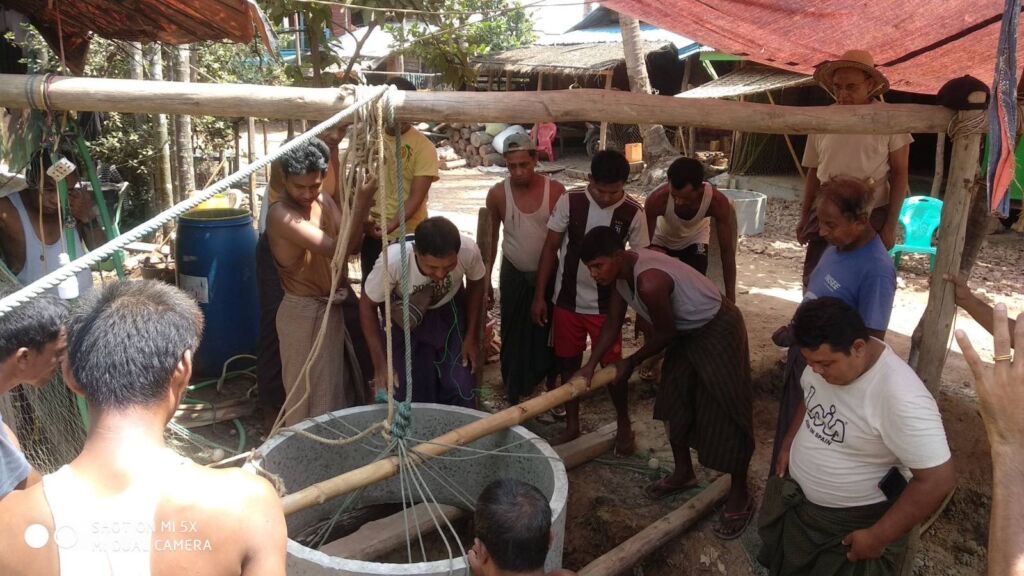
Photo of people digging a well in Rakhine
Digging a well in Rakhine

New Project: Mapping and Responding to Vulnerability through Nonviolent Collective Actions in Colombia

We are pleased to announce that a new research project will start in October: “Mapping and Responding to Vulnerability through Nonviolent Collective Actions in Buenaventura, Colombia”.

The project received a Creating Safer Space Small Grant through our open funding competition.

The project is led by Manuel Müller at FOR Peace Presence (Colombia), in collaboration with Co-Investigators at FOR Peace Presence and Colectivo ANSUR.

The project will use Participatory Action Research to work with five Afro-descendent and indigenous communities and organisations in the Buenaventura region of Colombia to map collective and individual vulnerabilities to physical harm. Community members will engage in critical analysis over the structures that have constructed vulnerability and the intersectional identities (race, gender, age, sexuality, place of residence, ability status) that interact with vulnerability at the community level. The research will explore through photos and collective histories the diverse strategies that individuals and communities have developed to protect themselves, their lands, and their traditions.

More information about the project is available here:
https://creating-safer-space.com/exploring-unarmed-civilian-self-protection-in-cameroons-anglophone-conflict/

Photo of the territory of the AINI Women's collective in the Naya river
The territory of the AINI Women’s collective in the Naya river. The flag is used by FOR Peace Presence as a protection measure to visibilize their presence.

Research Café: Writing a Successful Grant Application

The aim of the Creating Safer Space Café is to enable people in different parts of the world to exchange knowledge and to help build a community of Unarmed Civilian Protection (UCP) researchers and practitioners.

This month, Prof. Berit Bliesemann de Guevara and Prof. Beatriz Arias will lead a Panel Discussion on how to write a successful grant application. The Panel consists of researchers who successfully applied for Creating Safer Space research grants in our recent funding competition. Juan Mario Díaz and Simon Rushton (University of Sheffield, UK) will share their experiences of writing a successful Large Grant application on “Community strategies for Unarmed Civilian Protection in South-West Colombia: local experiences and lessons learned”. Astrid Torres Ramírez and Véronique Draily (Corporación Jurídica Libertad, Colombia), will share their experiences of writing a successful Small Grant application on “The Social Process of Guarantees of Antioquia, Colombia, an experience of unarmed civil protection with indigenous and peasant communities of Bajo Cauca”.

The Panel will be asked questions about how they developed their proposals, what challenges they faced, what advice they would give to others who apply for research grants, as well as questions from the audience. The Panel will also share their successful grant applications with the research café participants, to allow participants to learn more about what a successful grant application actually looks like.

12.30 – 1.30 pm UTC on Thursday 22 September
Please use a timezone converter to check your local time.

The session will be held in English and Spanish with simultaneous translation.

All welcome; please register here:
https://us06web.zoom.us/meeting/register/tZEuce-orjgrG9LwrA8pSpwr6SBcynxY7irg

An important aspect of a successful grant application is to bring together a strong team and to develop an equitable partnership.
In February 2022, a group of Colombia- and Sheffield-based researchers and grassroots organisations in the region came to visit CENCOIC coffee warehouse in Popayan, Cauca. This was part of a three-day workshop, which led to the development of the project “Community strategies for Unarmed Civilian Protection in South-West Colombia: local experiences and lessons learned”.

Enhancing Unarmed Civilian Protection (UCP) in ASEAN

Creating Safer Space Co-Investigator Chantana Banpasirichote Wungaeo moderated a Panel on ‘Enhancing Unarmed Civilian Protection (UCP) in ASEAN’, as part of an international seminar on ‘Whither ASEAN in a Deeply Troubled World’. The seminar was held on 15-17 August 2022 at Chulalongkorn University, Thailand, and virtually on Zoom.

Panel members included Mark Tamthai (Peace Studies Program at Payap University, Chiang Mai), Ronnie Delsy (Director, Nonviolent Peaceforce, Asia) and Amara Pongsapich (ASEAN Human Rights Commission).

The three speakers on the panel represent UCP in research, peace building and policy-making in the ASEAN community. The picture of the region is quite varied from low intensity conflict in Thailand, normalization and peace building in Mindanao in the Philippines, to military authoritarianism in Myanmar. The panel discussed how UCP can clearly be integrated into the peacemaking process in Mindanao, while there are challenges involved in applying UCP in both low intensity conflicts like in Thailand, where vulnerability is rooted in structural violence, as well as in open armed conflict in Myanmar, where intervention is almost not feasible.

Mark Tamthai, Co-Investigator on the Creating Safer Space research project ‘Introducing Unarmed Civilian Protection in Thai Society’, raises a few observations: “1) What UCP type activities are effective depends on the kinds of protection needed in different countries. Protection from targeted violence, or racially based violence, creates particular challenges for direct immediate intervention. 2) What UCP activities can assist in the current protection needs of civilians in Myanmar are not clear. Myanmar civilians seem to need protection from many different groups. UCP in Myanmar seems to be a huge challenge in the current climate. 3) A UCP organization within the official ASEAN structure does not seem feasible at the moment due to its position on non-interference. To contribute to UCP protection programs might require an ASEAN support program for local UCP organizations in ASEAN countries.”

Funding awarded to new research projects

The Creating Safer Space network has recently held a funding competition, and we have awarded funding to 13 research projects that will further our understanding of unarmed civilian protection and self-protection amidst violent conflict.

Projects will focus on the core countries of the Creating Safer Space network – Colombia, South Sudan, Myanmar and the Philippines – and we are also pleased to support projects in Cameroon, Palestine and Nigeria.

Four of the successful projects are led by organisations in the Global South. The remaining are led by UK universities, but all include co-investigators and/or project partners from the Global South.

The Creating Safer Space funding panel was impressed with the high quality of the applications. We received 59 applications in total, of which 50 projects met the basic eligibility criteria. We sincerely regret that we are not able to fund all high quality projects.

More information about the new research projects will be available on our Projects page in due course.


Research Café: Strategies for Community Protection and dealing with Election Violence

The aim of the Creating Safer Space Café is to enable people in different parts of the world to exchange knowledge and to help build a community of Unarmed Civilian Protection (UCP) researchers and practitioners.

This month, Mr Thiago Wolfer (Nonviolent Peaceforce South Sudan) and Prof. Rachel Julian (Leeds Beckett University) will discuss how UCP approaches that have been used to prevent violence in South Sudan could be adapted and implemented in dealing with election violence, looking at Kenya in particular and how it applies to other areas.

While focused on Kenya and South Sudan, this café will also be very relevant to any researchers or practitioners elsewhere in the world, who would like to know more about how UCP can be implemented in different conflict situations.

12.30 – 2.00 pm UTC on Wednesday 20th July

Please register here: https://us06web.zoom.us/meeting/register/tZIufu6hqTMiH9dBfuvO0JjKAHP3O-6zJBx0

Once you have registered for the event, you will receive an email with Zoom joining details.


New Training Course on UCP

The Creating Safer Space research network invites Expressions of Interest to participate in a 10-week training course on “Strengthening Civilian Capacities to Protect Civilians”.

This course is an introduction to the objectives, principles, sources of guidance, and methods of Unarmed Civilian Protection (UCP). The course is led by Dr Ellen Furnari and Dr Thor Wagstrom, and is based on course content developed by our partner organisation Nonviolent Peaceforce. There are no course fees, and course material will be provided for free.

The course dates are 26 March – 4 June 2022. The course will require about 8-10 hours per week to read, participate and complete assignments. Participants complete all activities online through modules that are accessed through the course website. While there are no scheduled meetings for this course, participants are invited to meet the course facilitators and each other during an informal kick-off Zoom meeting on Saturday 26 March. Additional informal meetings are likely to be arranged during the course, but attendance will not be required.

Eligibility
Researchers, Masters/PhD students and relevant practitioners are invited to submit an Expression of Interest to participate in this course. Anyone is welcome to apply, but places are limited. Priority will be given to those candidates who are most likely to benefit from the course, with priority to candidates from the UK and from the Global South. We especially encourage applicants for our research grants to apply.

How to apply
Please submit an Expression of Interest of no more than 100 words to creating-safer-space@aber.ac.uk, with an explanation of your interest in the course and how it would benefit you in your work or studies.

More information about the content of the course is available on here.


Research Café: Using Textiles as a Research Method

The aim of the Creating Safer Space Café is to enable people in different parts of the world to exchange knowledge and to help build a community of Unarmed Civilian Protection (UCP) researchers and practitioners.

This month, Prof. Beatriz Arias (University of Antioquia) will provide an introduction to using textiles (embroidering, sewing, and other needlework) as a participatory and creative research method, and will explore the benefits of using this method for research on Unarmed Civilian Protection.

12.30 – 2.00 pm UTC on Thursday 17 March

The session will be held in English and Spanish with simultaneous translation.

All welcome. Please contact creating-safer-space@aber.ac.uk for the Zoom joining details.


New work package: Nonviolent Artivism Against Police Brutality in Kenya

The Creating Safer Space network is pleased to announce a new work package on the following topic:

Nonviolent Artivism Against Police Brutality in Kenya

The work package is led by Martha Okumu (Peace Tree Network) in collaboration with Elias Opongo (Hekima University College).

More information about the work package is available on our website: https://creating-safer-space.com/nonviolent-artivism-against-police-brutality-in-kenya/

A mural of police brutality in Kibra’s Kamukunji grounds by Detail Seve on June 4, 2020. Image: MERCY MUMO

Research Café: Using Drawing as a Research Method

The aim of the Creating Safer Space Café is to enable people in different parts of the world to exchange knowledge and to help build a community of Unarmed Civilian Protection (UCP) researchers and practitioners.

This month, Prof. Berit Bliesemann de Guevara (Aberystwyth University, UK) and Prof. Rachel Julian (Leeds Beckett University, UK) will provide an introduction to ‘Drawing Out’ as a participatory and creative research method, and will explore the benefits of using this method for research on Unarmed Civilian Protection.

12.30 – 2.00 pm UTC on Thursday 17 February

The session will be held in English and Spanish with simultaneous translation.

All welcome. Please contact creating-safer-space@aber.ac.uk for the Zoom joining details.