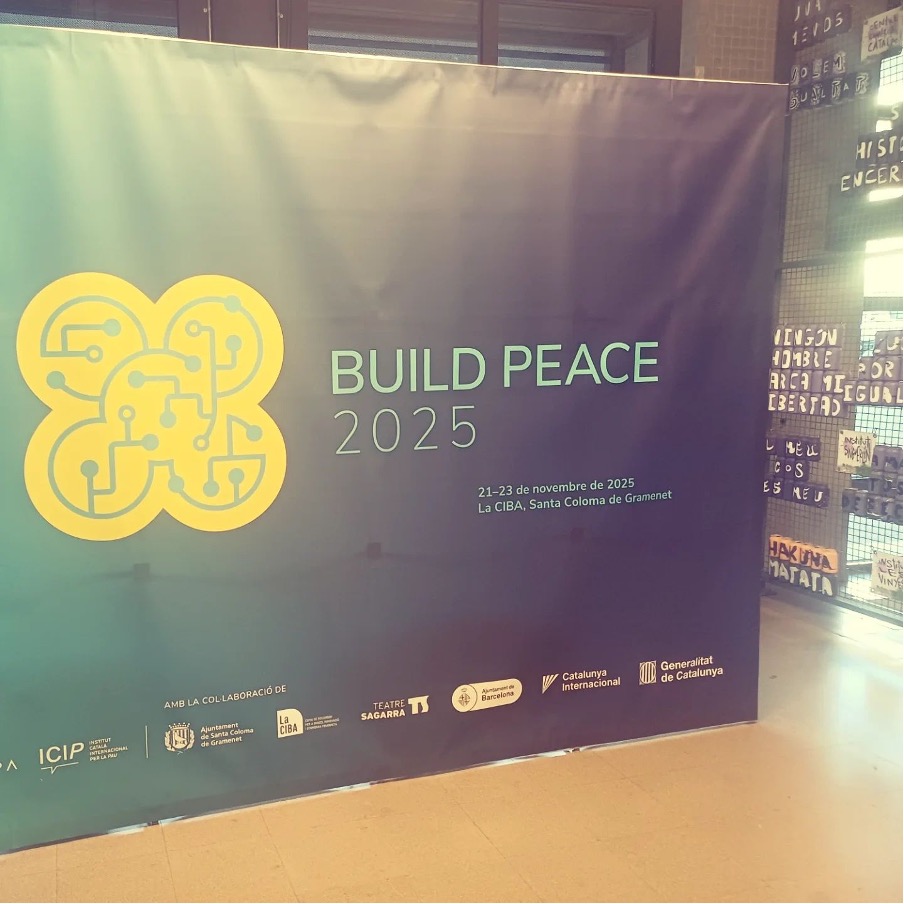
In November 2025, MasterPeace Cali participated in the Build Peace 2025 Conference in Barcelona, organised by Build Up and the International Catalan Institute for Peace (ICIP). As part of the conference programme, the team facilitated the workshop “Civilian Nonviolent Self-Protection in Latin American Communities: Alternatives to Militarised Security”, in which they shared practices and lessons related to Unarmed Civilian Protection (UCP) learned from community initiatives in Colombia.
In particular, the MasterPeace Cali team disseminated insights from the project “Development of civil protection capacities in women displaced by the armed conflict through popular communication and Community Legal Empowerment” supported by the Creating Safer Space network. During the workshop, they presented the participatory action research carried out in Cali with the grassroots organisation Semillero de Paz Llano Verde, highlighting community-based practices of Unarmed Civilian Protection (UCP) developed by women victims of armed conflict in Colombia. As part of the session, they also shared the transmedia booklet produced by the community organisation as a key resource emerging from the project, which documents protection strategies, community communication practices, and lessons learned from the research process.
Approximately 100 conference participants (including researchers, practitioners, and representatives of peacebuilding organizations from different regions) attended the session. The activity contributed to increasing the international visibility of community-led protection initiatives in Colombia and generated discussion among participants on how similar nonviolent civilian protection approaches could be adapted to other conflict-affected contexts. Participants expressed interest in the methodologies used and in the role of grassroots organisations in developing alternatives to militarised security.